Legacy Through Language: Crafting a Family Dictionary to Celebrate Words and Wisdom Passed Down
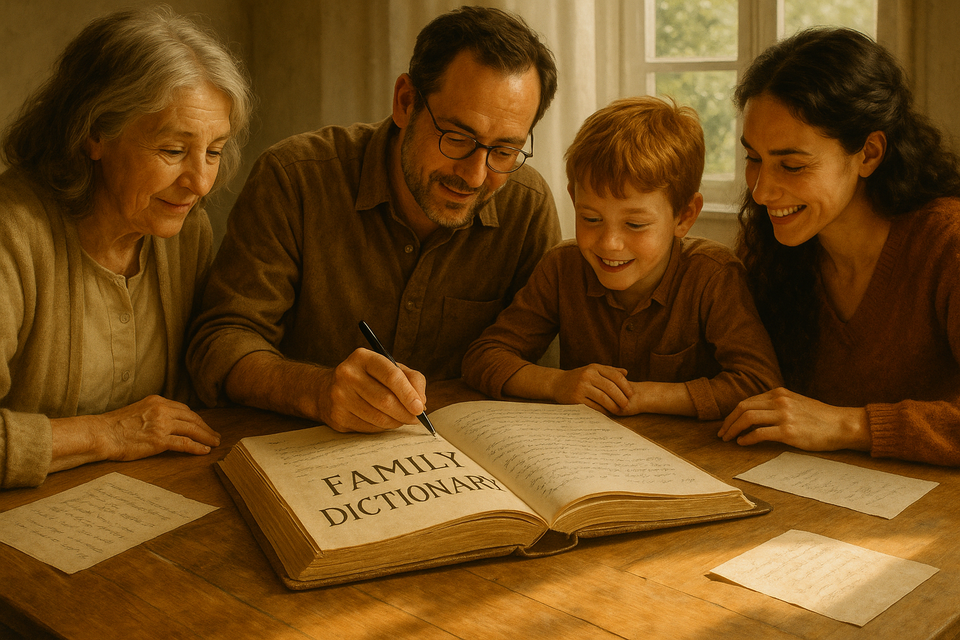
In a world saturated with digital communication, where words often flit across screens only to be forgotten moments later, the idea of a family dictionary might seem quaint, even anachronistic. But what if we viewed it instead as a living legacy, a testament to the rich tapestry of language and wisdom passed down through generations? The words we share within our families are more than mere tools of communication; they are vessels of culture, history, and enduring love.
The Power of Words in Family Heritage
The stories and phrases that echo around a family table are often more than just casual conversation; they are the threads that weave a family’s unique narrative. According to a Pew Research survey, 54% of Americans in their 40s are caring for both an aging parent and a child, forming what is often referred to as the 'sandwich generation.' This dual role often brings with it a deep desire to preserve the wisdom of older generations while nurturing the next.
Language plays a vital role in this transfer of wisdom. The peculiar sayings of a grandmother, the bedtime stories written by a father, or the inside jokes that only siblings understand—these are the linguistic treasures that hold a family together, even when physically apart.
Building Your Family Dictionary
The concept is simple but profound. Start by gathering words, phrases, or sayings that hold special meaning within your family. This could be anything from a nickname with a funny backstory to a profound piece of advice passed down through the generations.
1. Collecting Words
Begin informally by jotting down words and phrases as they come up in conversation. Encourage family members to share their favorites during gatherings. This collaborative effort not only enriches the dictionary but also strengthens family bonds.
2. Contextualize and Preserve
For each entry, include an explanation or story behind the word or phrase. Why does it matter? What memory does it spark? This context transforms a simple list of words into a rich tapestry of family history.
3. Choosing the Format
The format of the dictionary can be as simple or elaborate as you like. Consider a handwritten journal for an intimate touch, or a digital version that can be easily shared and updated. Apps like Google Docs or Evernote offer collaborative features, while platforms like Storyworth allow for more extensive storytelling.
The Faith Connection
For those of us with faith, the words we use often hold deeper meanings. Proverbs, scripture, and prayers find their way into daily conversations, underscoring our beliefs and values. In crafting a family dictionary, such spiritual elements naturally weave themselves into the narrative, providing a foundation of faith that informs and inspires future generations.
As Christians, we know the power of the Word—both divine and familial. Just as the Bible serves as a guide, our family dictionary can act as a spiritual roadmap, helping descendants navigate life's challenges grounded in legacy and belief.
Preserving Legacy in a Changing World
In an era where families are more dispersed than ever, maintaining a cohesive family identity can be challenging. With 54% of Americans in their 40s managing the care of both older and younger family members, it's evident that the family unit remains central to many lives, despite geographic distances. A family dictionary serves as a touchstone, a tangible connection to the past that can be easily shared with new generations wherever they may be.
Actionable Steps to Start This Week
If the idea of a family dictionary resonates with you, here are practical steps to start this week:
- Family Meeting: Host a casual gathering, either in person or virtually, to introduce the idea. Share examples and invite everyone to contribute their favorite words and stories.
- Create a Template: Use a simple template for entries that includes the word, its meaning, and a backstory.
- Set a Schedule: Dedicate a regular time each month to update the dictionary, ensuring it grows and evolves.
- Share the Progress: Regularly share updates with the family to keep the excitement alive and inspire more contributions.
In a world that often feels transient and fleeting, creating a family dictionary is a small yet significant step toward building a lasting legacy. It’s a project that invites us all to pause, reflect, and cherish the words and wisdom that form the core of our familial bond. As we embark on this journey, let us remember that in nurturing these connections, we are not just preserving the past, but gifting the future.