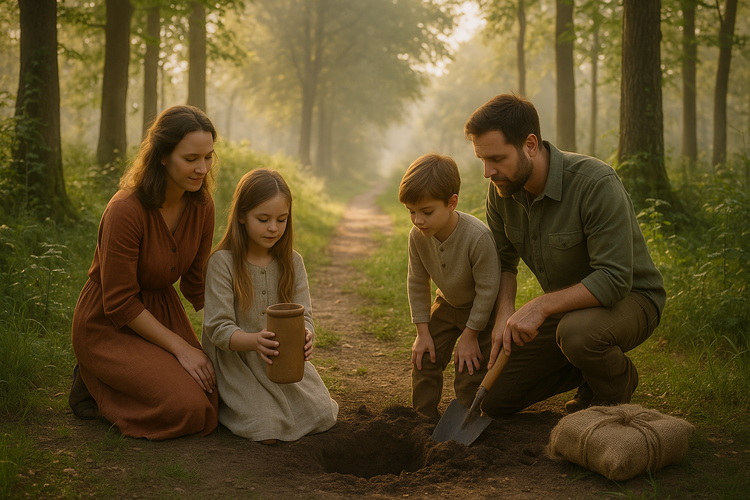
Planting Seeds of Faith: Revolutionary Approaches to Cultivating Spiritual Roots Across Generations

In an age defined by rapid change, the task of cultivating deep spiritual roots within families and communities often feels daunting. Yet, it's in these transformative times that we find opportunities to reinforce our faith traditions across generations. Recent developments and forward-thinking approaches provide fresh pathways to intertwine faith with daily life, ensuring it endures and flourishes long after we are gone.
The Legacy of Enduring Faith
At the heart of many family histories lies a commitment to faith, often passed down like a cherished heirloom. The Southern New England Conference demonstrates how legacy-driven initiatives can support such spiritual continuance. The SNE Legacy Corporation, originally formed to aid churches at the end of their ministries, has expanded its mission significantly, as noted in their 2026 impact report. This organization now plays a pivotal role in nurturing and preserving the spiritual legacies of church communities, focusing on legacy and purpose [1].
Case Study: Tyrone Brown's Leadership
Tyrone Brown's work with the LGBTQIA+ Task Force through Leadership Greater Hartford’s Quest program is a testament to innovative community leadership. By integrating inclusive practices within spiritual settings, Brown helps ensure that diverse voices continue to shape the legacy of these communities [1].
Educational Strategies for Spiritual Growth
Education plays a crucial role in spiritual development, offering tools to deepen understanding and practice. The University of Georgia's course offerings highlight a growing trend of integrating data-driven strategies into education, providing insights into how tailored educational approaches can enhance spiritual learning [2].
Integrating Faith in Learning
Programs that combine faith-based perspectives with modern educational techniques allow for a more holistic approach to spiritual growth. The emphasis on life-span development and instructional strategies at institutions like MACU provides a framework for embedding faith into everyday learning [4].
Pioneering Community Models
Innovative community models are essential for cultivating sustained spiritual growth. Chris Scruggs emphasizes how Jesus' approach to decision-making—listening to God's voice and fostering community through active engagement—remains relevant. These principles can guide modern community-building efforts, emphasizing the importance of listening and collaboration [6].
Reviving Traditional Practices
Forging Bonds highlights the importance of prayer and spiritual disciplines in fostering deep-rooted faith. Their approach calls for a return to foundational practices, combined with a contemporary understanding of spiritual warfare, to enhance personal and communal spiritual resilience [7].
Legacy Awards and Recognitions
Recognizing and celebrating the contributions of individuals and organizations plays a critical role in reinforcing spiritual legacies. The Legacy Award, given to Darrell Goodwin and his family, exemplifies how public acknowledgment can inspire others to contribute to a lasting spiritual heritage. Such awards highlight the impact of individuals who embody the principles of faith and leadership in their communities [1].
Building a Legacy of Service
Initiatives like the Rev. Cleo Graham and Faith Congregational Church’s work, recognized with the Sanctuary Award, illustrate how churches can serve as beacons of hope and stability, guiding new generations in faith [1].
Philanthropy as a Tool for Spiritual Growth
Philanthropy offers another pathway to cultivate and sustain spiritual legacies. When aligned with spiritual goals, philanthropic efforts can foster lasting change and inspire future generations to give back. These acts of stewardship are integral to nurturing a legacy that reflects one’s faith values.
The Role of Faith in Philanthropy
By embedding faith-based principles into philanthropic efforts, individuals can ensure that their giving aligns with their spiritual beliefs, creating a ripple effect that extends beyond financial contributions.
The journey of nurturing spiritual legacies is as much about the present as it is about the future. By integrating innovative educational practices, pioneering community models, and strategic philanthropic efforts, we can plant seeds of faith that thrive across generations, ensuring our spiritual heritage remains vibrant and impactful for years to come.