Heritage Through Action: How Family Volunteering Builds Lasting Values
In the tapestry of family stories, few threads are as vibrant as those woven through shared acts of service. Family volunteering doesn't just plant the seeds of generosity—it cultivates a robust garden of values that can flourish across generations. As we explore this powerful dynamic, we'll uncover how engaging in community service as a family can build a legacy of empathy, action, and enduring values.
Building Bridges Across Generations
Volunteering as a family is more than just a noble act; it's a bridge that connects generations, fostering understanding and unity. According to a 2014 study, discussing emotions and mental states with children is linked to greater empathic helping behavior, suggesting that volunteering can reinforce these conversations and strengthen family bonds [3]. Families that volunteer together often report a renewed sense of purpose and connection, as highlighted by Joni Magnus-Ramsey's observations on caregiving [7].
Instilling Values Through Action
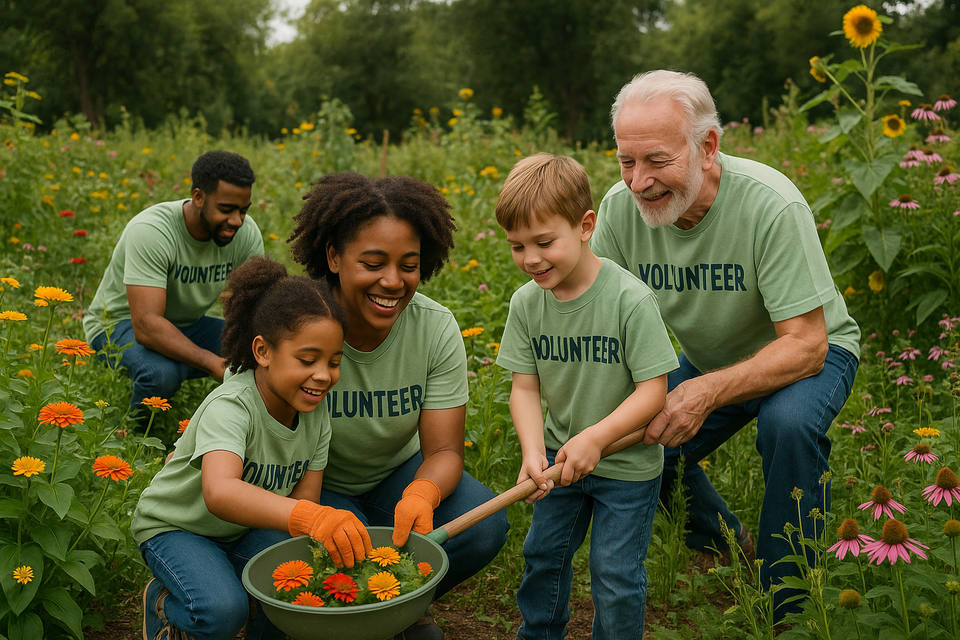
Volunteering is a practical framework for teaching children timeless values such as empathy, responsibility, and leadership. When families engage in acts of service, children witness these values in action, creating a living classroom where lessons are experienced rather than taught. This experiential learning can help cement a child's understanding of their place in the world and their potential to make a difference.
Empathy and Awareness
By participating in activities like food drives or environmental clean-ups, families can discuss the broader social issues at play, such as poverty or climate change. These discussions not only educate but encourage children to see beyond their immediate surroundings and consider the needs and experiences of others [5].
Creating a Family Legacy of Giving
Volunteering is a key component of legacy building, offering families the opportunity to leave a lasting imprint. A strategic blend of time, skills, and financial resources can set the foundations of a family legacy that extends beyond mere monetary support. As noted by the Nathan Cummings Foundation, leading through challenging times builds a leader's voice and character [2]. This is equally applicable to families navigating their philanthropic journey.
Structured vs. Organic Volunteering
While some families might choose formal volunteering avenues through established nonprofits, others might opt for more organic forms of service, such as neighborhood projects or school initiatives. Both approaches can be effective, depending on the family’s values and goals.
Navigating Economic Uncertainty While Giving
In today's fluctuating economic landscape, maintaining a commitment to volunteering can be challenging. However, it is also an opportunity to teach resilience and adaptability. Despite concerns about inflation and economic shifts, generous giving continues, with foundations and bequests standing out as particularly strong contributors [4]. Families can model this adaptability by finding innovative ways to contribute, such as through time or skills when finances are tight.
Conclusion: Crafting a Living Legacy
Ultimately, the practice of family volunteering is about crafting a living legacy. It is about ensuring that future generations inherit more than just financial wealth—they inherit a world view and a set of values that guide them toward meaningful, impactful lives. As we navigate this path, we see opportunities not just to give, but to transform ourselves and our communities in the process.