AI Is Transforming Real Estate Visualization and Creative Vision
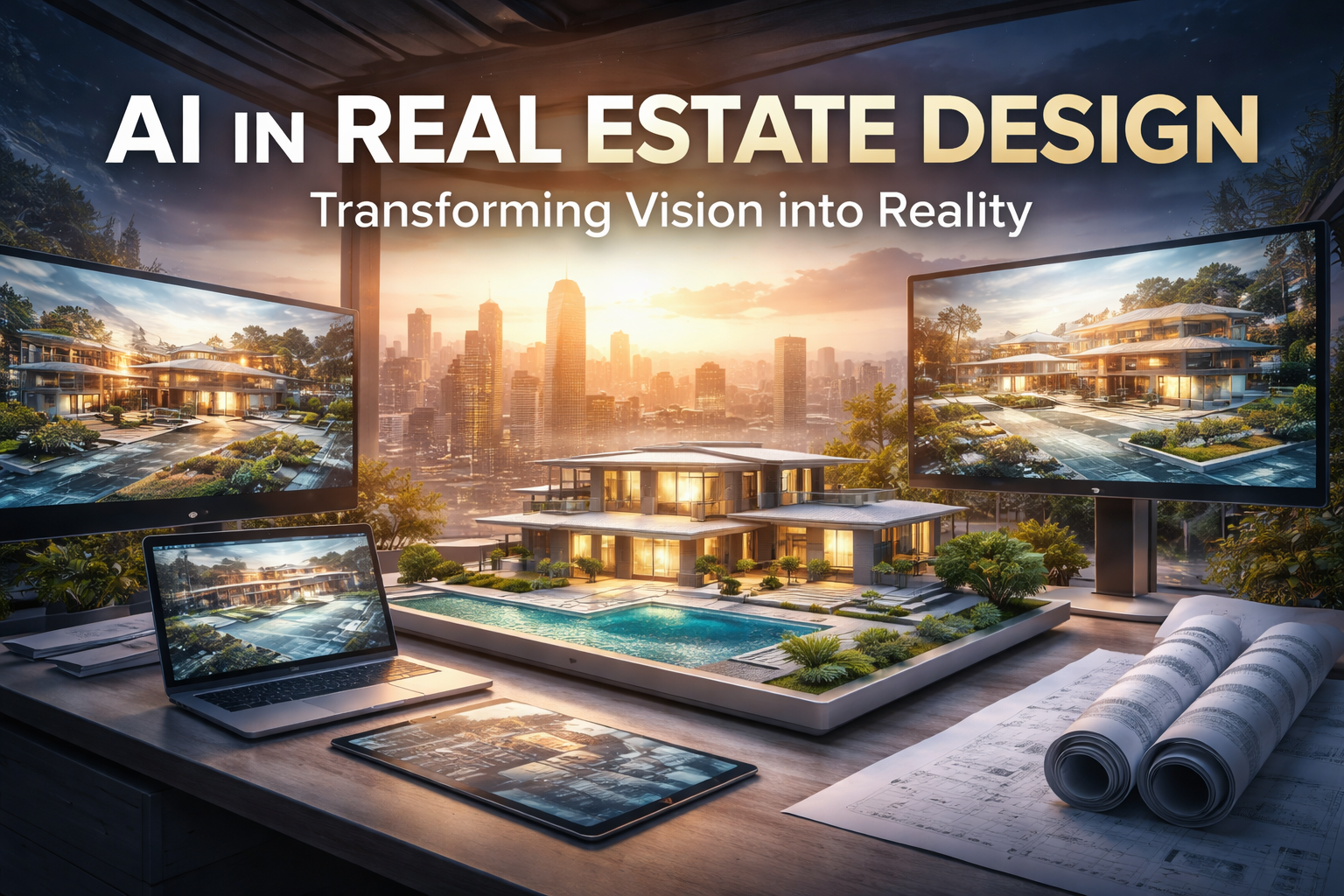
Real estate has always been a game of imagination.
Before a foundation is poured or a wall is framed, everything exists as an idea—an abstract concept floating somewhere between a sketch, a mood board, and a financial model. The challenge has never been just building structures; it’s been translating vision into something others can see, feel, and believe in.
For decades, architects and developers relied on blueprints, hand-drawn renderings, and eventually 3D modeling software to bridge that gap. But even the best traditional tools left room for interpretation—and often, misalignment.
Today, artificial intelligence is closing that gap entirely.
AI is not just improving how we design real estate—it’s fundamentally changing how vision itself is created, communicated, and executed.
The Problem with Traditional Visualization
Even with advanced 3D rendering tools, real estate design has historically faced a few core limitations:
- Time-intensive iteration cycles: Making changes to a concept could take hours—or days—of rework.
- Creative bottlenecks: Designers are limited by their own experience, references, and time constraints.
- Client imagination gaps: Not every investor, buyer, or stakeholder can “see” a finished space from a rendering.
- Cost of exploration: Testing multiple design directions often becomes expensive and impractical.
The result? Compromise. Projects settle into “good enough” rather than reaching their full creative and financial potential.
Enter AI: From Concept to Visual Reality
AI changes the equation by acting as both a creative partner and a production engine.Instead of manually building every concept from scratch, developers and designers can now:
- Generate multiple design directions instantly
- Refine styles in real-time
- Translate abstract ideas into photorealistic visuals
- Iterate rapidly without restarting workflows
What used to take weeks can now happen in hours. But the real breakthrough isn’t just speed—it’s clarity. At the earliest stage of a project, ideas are often vague:
“Modern but warm.”
“Luxury, but not flashy.”
“Minimal, but still inviting.”
These are difficult to communicate through traditional tools. AI excels here. By combining natural language with generative models, you can:
- Describe a space in plain English
- Instantly generate multiple visual interpretations
- Compare styles side-by-side
- Refine direction before committing to formal design work
This transforms early-stage design from guesswork into a highly visual, collaborative process.
Rapid Iteration Without Creative Fatigue
One of the most powerful aspects of AI in real estate design is the ability to explore endlessly without burnout.
Instead of choosing between three design options, you can explore thirty. Want to test:
- A darker, moodier interior palette?
- A Mediterranean exterior instead of modern?
- Different lighting conditions at sunset vs. midday?
- Variations of materials—stone, stucco, wood, glass?
AI allows you to run these variations instantly.
This leads to better decisions—not because you worked harder, but because you saw more.
Bridging the Gap Between Vision and Stakeholders
One of the biggest friction points in real estate is alignment. Developers, investors, architects, and buyers often have different interpretations of the same idea. AI-generated visuals eliminate ambiguity.
Instead of explaining a concept, you show it. This has massive implications:
- Faster approvalsStakeholders can make decisions confidently when they see realistic outputs.
- Stronger investor confidencePhotorealistic visuals make projects feel tangible before construction begins.
- More compelling marketingPre-sales and leasing efforts become dramatically more effective.
- Reduced costly revisionsMisunderstandings are caught early—before they become expensive.
From Renderings to Emotional Experience
Traditional renderings often look “perfect”—but not always real. AI has introduced a new level of visual storytelling:
- Natural imperfections
- Realistic lighting behavior
- Lived-in textures
- Human-centric environments
Spaces no longer feel like sterile models—they feel alive. This matters because real estate decisions are emotional. Buyers don’t just purchase square footage—they purchase a feeling. AI helps you design and communicate that feeling with precision.
Enhancing, Not Replacing, Human Creativity
There’s a misconception that AI replaces designers. In reality, it amplifies them. AI handles repetitive rendering tasks, exploration of variations, rapid visualization and more. Humans focus on taste, intent, narrative, and final decision-making.
The best results come from this collaboration. AI expands the creative canvas—but humans still define the vision.
Here’s how forward-thinking developers are already integrating AI into their workflow:
1. Concept Development
Generate multiple architectural directions before hiring full design teams.
2. Interior Design Exploration
Test furniture layouts, materials, and color palettes instantly.
3. Pre-Construction Marketing
Create hyper-realistic visuals for listings before ground is broken.
4. Renovation Planning
Visualize upgrades and compare ROI-driven design choices.
5. Client Customization
Allow buyers to preview personalized finishes in real time.
The Competitive Advantage
In a crowded market, differentiation is everything. AI-driven design provides:
- Faster project timelines
- Better design decisions
- Stronger marketing assets
- Higher perceived value
Developers who embrace this shift aren’t just improving efficiency—they’re elevating the entire experience of buying and building real estate. We’re just getting started. In the near future, expect fully interactive AI-generated walkthroughs, real-time design customization for buyers, AI-assisted zoning and layout optimization, seamless integration between concept, render, and construction
The line between imagination and reality will continue to blur.
Real estate has always been about vision—but for the first time, we have tools that allow that vision to be seen exactly as intended, instantly and at scale. AI doesn’t just help you design better buildings. It helps you communicate belief. And in real estate, belief is what turns ideas into assets.